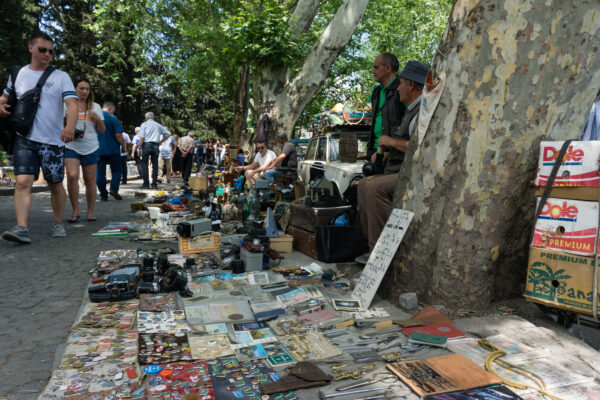
Travel through Georgia and you’ll encounter the same scene in every village: a grandfather handing you a glass of homemade wine, saying, “This is our family’s wine.” An 8,000-year-old tradition is alive and breathing in a family kitchen.
Georgia is the world’s oldest wine-producing country. In 2017, BBC and National Geographic simultaneously reported that pottery fragments from a Neolithic site in Georgia contained wine residues dating back to approximately 6,000 BC — 5,000 years before France, 6,000 years before Italy. In this land, wine is not a beverage. It is a culture that flows like blood.
The Qvevri Artisans: Amphorae That Breathe in the Earth
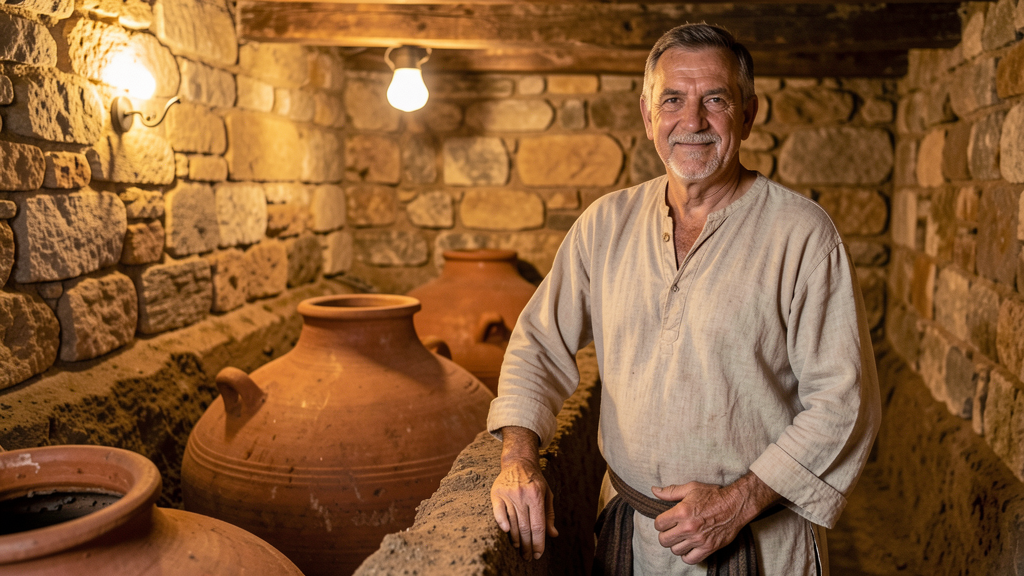
The heart of Georgian wine is the qvevri — a clay vessel buried underground where grapes ferment and age simultaneously with their skins, stems, and seeds. In 2013, this ancient method was inscribed on the UNESCO Representative List of the Intangible Cultural Heritage of Humanity.
The craftsmen who make qvevri are called qvevris klistsvili. Everything is done by hand: shaping the clay, firing at 1,200°C, and lining the interior with beeswax. A finished qvevri, once buried, can serve for 50 or even 100 years. The constant temperature of the earth naturally matures the wine inside.
One artisan told me: “A qvevri isn’t just a vessel. It’s alive. The earth lets it breathe.”
525 Grape Varieties, One Family’s Legacy
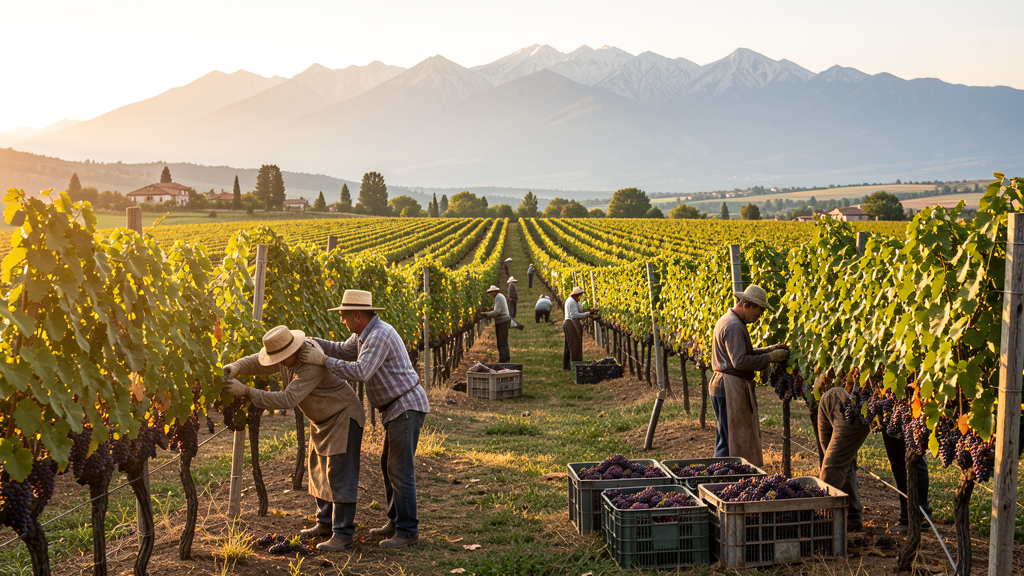
Georgia has over 525 indigenous grape varieties — more than any other wine-producing nation. The flagship red is Saperavi; the white is Rkatsiteli. But the real story lies not in commercial wines, but in the house wines produced in family kitchens.
Walk through a village in Kakheti, Georgia’s wine heartland, and you’ll find a marani (traditional wine cellar) in every home. Qvevri vessels are buried in the ground below, and each family harvests, presses, and ferments their own wine — a tradition passed from father to son, neighbor to neighbor. UNESCO’s inscription notes: “Qvevri manufacture and wine-making are passed down by families, neighbours, friends and relatives.”
People You Meet in the Marani
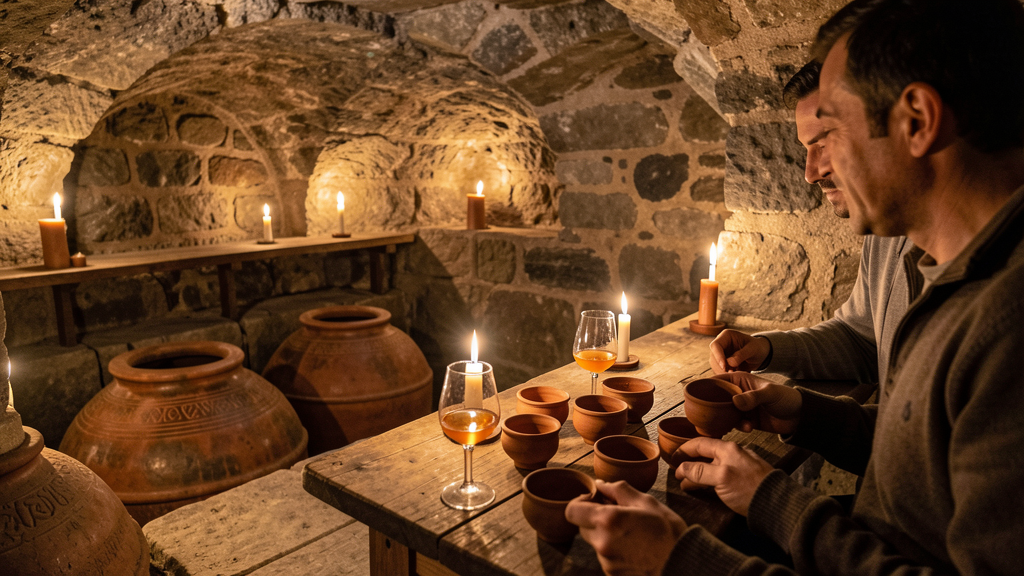
Visit a family winery in Kakheti and the owner will personally pour and explain each wine. A 5-6 glass tasting costs 35-50 GEL (approximately $13-$19). A full tasting of 10+ glasses runs about 80 GEL ($30). Unlike commercial wineries, here the owner shows you the qvevri, explains each grape variety, and shares the history of wine in their family.
One winery owner’s words stayed with me: “The qvevri my grandfather buried is still in use. It’s been 70 years. I’m pouring wine from the vessel he made. This isn’t just wine. It’s our family’s time.”
Orange Wine: The World Rediscovers Georgia
The global trend of orange wine — white grapes fermented with their skins, producing an amber-hued wine — originated right here in Georgia’s qvevri tradition. While a glass in a New York Michelin-starred restaurant might cost $20, the same style of wine costs 15-30 GEL ($5.60-$11.30) a bottle in a Georgian marani.
Fermented with skins, seeds, and stems together, the wine is rich in minerals with a gentle tannin structure that wraps around the palate. The first sip is unfamiliar; the second is addictive. Georgians have been drinking it this way for thousands of years.
Practical Guide: Kakheti Wine Tours
Where: Kakheti region is a 1.5-hour drive from Tbilisi. Sighnaghi and Telavi are the main hubs for wine tours.
- Full tour: ~260 GEL ($98) per person — transport, 2-3 winery visits, lunch included
- Family winery tasting: 5-6 glasses 35-50 GEL ($13-$19), 10 glasses ~80 GEL ($30)
- Orange wine bottle: 15-30 GEL ($5.60-$11.30)
- Harvest festival (Rtveli): September-October annually, hands-on grape harvest experience
- Suggested itinerary: Depart Tbilisi → Kakheti → Visit 2 family wineries → Stroll Sighnaghi Old Town → Return (day trip possible)
In Georgia, wine is not a product. It is people. When a grandson pours wine from a vessel his grandfather buried, 8,000 years of time fill a single glass. That’s why the most memorable part of a Georgia trip isn’t a famous winery — it’s a glass of homemade wine offered by a stranger in a village you can barely pronounce.