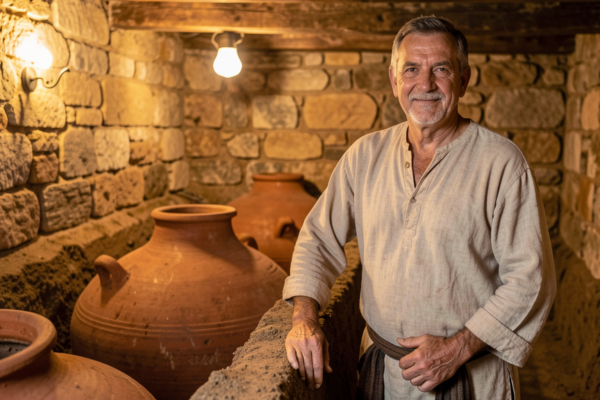
In Tbilisi, a market is rarely just a place to shop. It is where the city’s memory and its everyday life run in parallel. The open-air Dry Bridge Market gathers elderly men laying out Soviet-era cameras and silver samovars along the Mtkvari river, while the Dezert Bazaar in the northwest of the Old Town is home to husband-and-wife vendors who greet regulars with walnuts, churchkhela, and freshly ground spices. A mother shaping khinkali by hand, a farmer arranging emerald fenugreek leaves, an old man polishing a brass cigarette case — these scenes tell you more about Georgia than most museums.
1. Dry Bridge Market: The Spirits of the Flea Market
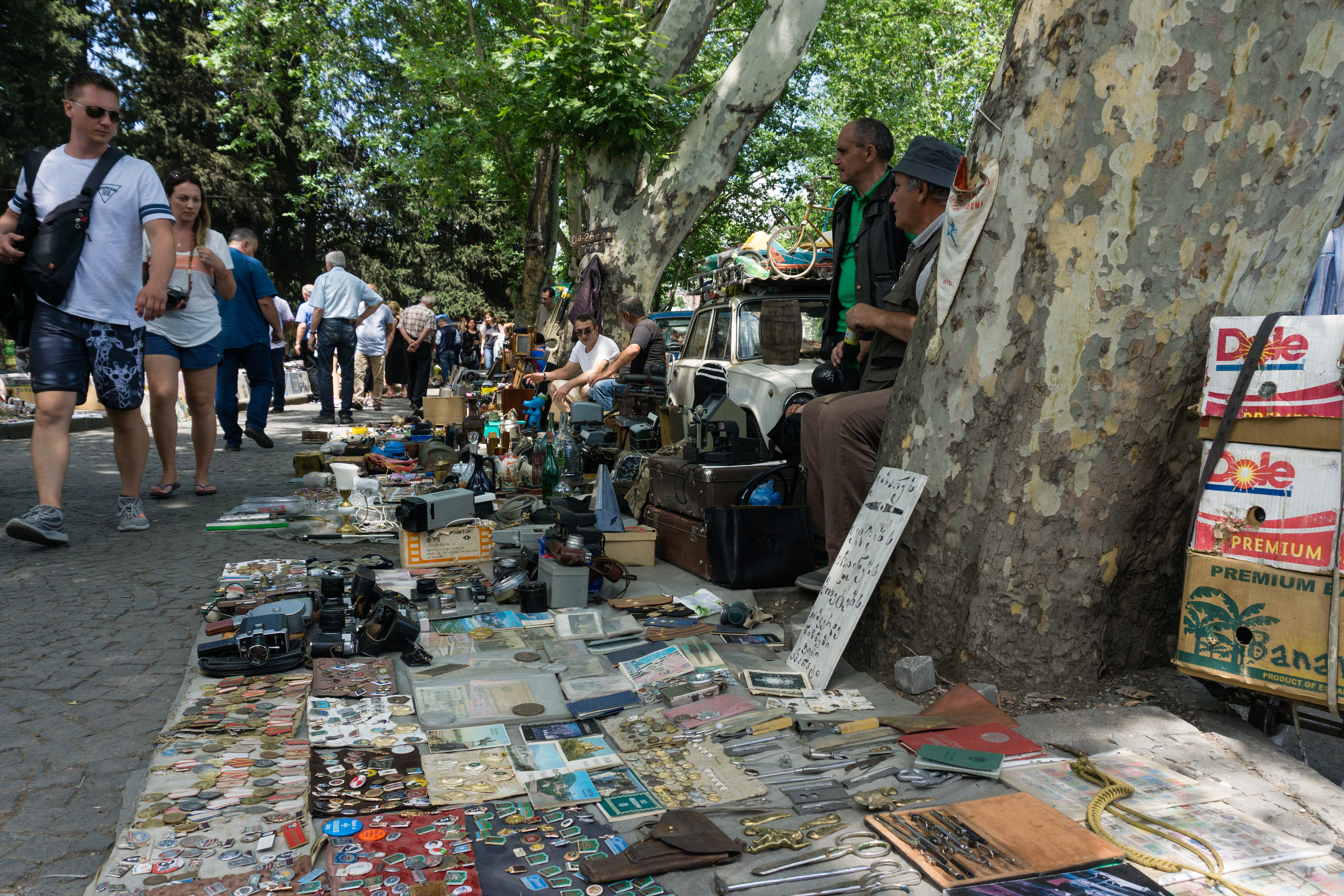
Dry Bridge Market is an open-air flea market that spreads along the Mtkvari river embankment, north of Tbilisi’s Old Town. The name refers to the bridge on the opposite bank (the market actually sits on dry land). The market formed organically in the early 1990s, after the dissolution of the Soviet Union, when retirees began selling family heirlooms to make ends meet (Source: Georgian National Tourism Administration overview, 2025).
Hours are daily, 11:00 to 18:00, with the highest foot traffic on Saturdays and Sundays (Source: Tbilisi market guide, 2025). Entry is free. About a hundred stalls line the riverside sidewalk.
What you will find at Dry Bridge
- Soviet-era cameras: Zenit, Fed, and other Russian-made film cameras dominate the tables. Working models typically sell for 30–80 GEL (about KRW 13,200–35,200).
- Enamel brooches and trinkets: Soviet-era labor pins, Georgian cloisonné jewelry, and brass cigarette cases. Most pieces start at 5–15 GEL (KRW 2,200–6,600).
- Silverware and samovars: Russian and Georgian silverware, brass samovars for traditional tea. Prices vary widely with weight and condition, generally 50–300 GEL (KRW 22,000–132,000).
- Paintings, woodcuts, and Orthodox icons: Small landscapes by Georgian artists and antique Orthodox icons hang from the bridge railings. From 20 GEL student works to 1,000 GEL pieces by established artists.
- Coins and stamps: Soviet-era coins and early post-independence Georgian stamps arranged in albums. A favorite hunting ground for collectors.
The real attraction of Dry Bridge is not the merchandise but the vendors. Most are men in their sixties to eighties, and many will offer a short story behind each object: “I was a camera repairman,” “This belonged to my mother.” Polite bargaining is expected; 30–50% off the asking price is realistic. Bring cash — most stalls do not accept cards.
2. Dezert Bazaar: The Supply Line of the Tbilisi Table
If Dry Bridge is the market of the past, the Dezert Bazaar — about a 15-minute walk from the Old Town — is the market of the present. Officially one of the oldest agricultural markets in Tbilisi, it has fed the city’s families since the 19th century (Source: Tbilisi City Hall historical overview, 2024).
Hours are daily, around 07:00 to 17:00–18:00, and Sundays are the busiest. The bazaar hosts roughly 200–300 stalls, organized into five distinct zones:
- Produce: In summer, mountains of peaches, plums, figs, English cucumbers, and tomatoes. In winter, potatoes, cabbage, beets, and carrots dominate.
- Cheese and dairy: Regional cheeses such as Imeruli, Sulguni, and Guda are sold in large rounds by weight, typically 18–30 GEL (KRW 7,900–13,200) per kilogram.
- Meat and fish: Fresh chicken, veal, and lamb are cut to order, alongside Black Sea freshwater fish. Muslim vendors clearly mark halal slaughter.
- Spices and herbs: Blue fenugreek (Georgian: udzho suneli), coriander seed, dried lemon peel, thyme, and rosemary sold by the 100-gram bag for 2–5 GEL (KRW 880–2,200).
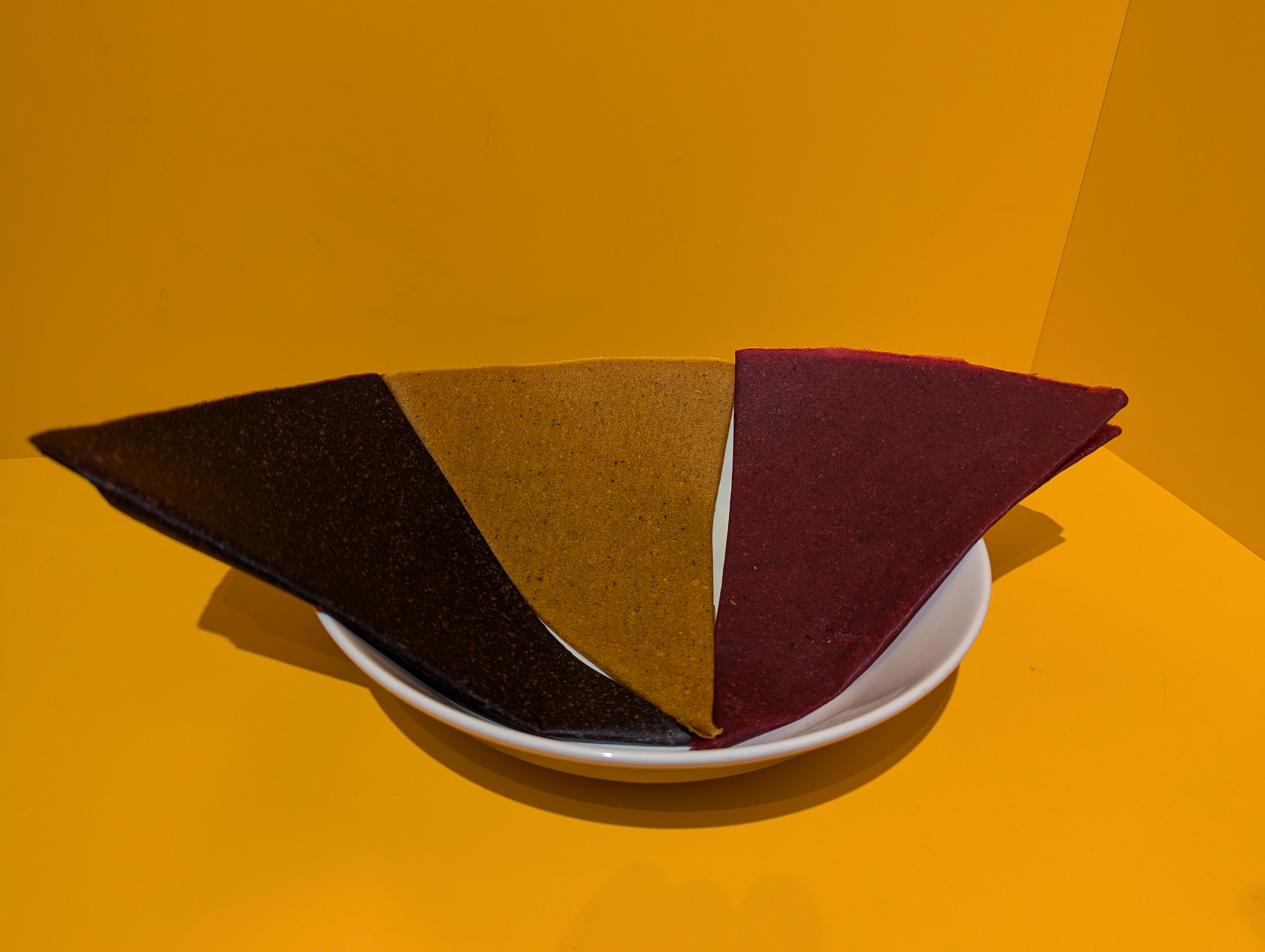
- Sweets and nuts: Churchkhela (walnut-and-grape-juice “candy”), lugatu, Georgian-style chocolate, and dried fruit. A 40–50 cm churchkhela strand typically sells for 5–8 GEL (KRW 2,200–3,500).
Dezert Bazaar is largely a family-run operation. Inside the market, a few small cookshops serve shashlik skewers, lobio (bean stew), and mamalika (cornmeal porridge) fresh to order. A full meal runs 8–15 GEL per person (KRW 3,500–6,600), making it one of the best-value meals in the city.
3. Three Things Every Tbilisi Market Has in Common
At first glance the two markets look different. The underlying rules, however, are almost identical. Learn these three and you will navigate any Tbilisi bazaar with ease.
① Bargain, but politely
Bargaining is part of the culture at both markets. 20–30% off the first price is a normal, polite outcome. Some elderly vendors treat the negotiation itself as a performance — keep the tone light and they will smile. Food prices, however, are not negotiable.
② Cash is king — and small change matters
Cards are unreliable in either market. Larger stalls may take cards, but most small vendors expect cash. Carry a healthy mix of 1, 2, 5, and 10 GEL notes plus 50 tetri and 1 GEL coins. Paying with a large note can lead to a polite claim of “no change.”
③ Learn three words of Georgian
Two phrases open most stalls. “Ra-diros borit?” (How much is it?) is the universal opener. “Orcha” (A little less) is your answer when the price feels high. Younger vendors speak some English; older ones rely on gestures, calculator apps, and the patience of regulars.
4. Practical Visit Guide
| Item | Dry Bridge | Dezert Bazaar |
|---|---|---|
| Hours | Daily 11:00–18:00 | Daily 07:00–17:00 |
| Entry fee | Free | Free |
| Main goods | Antiques, cameras, icons | Produce, cheese, spices, churchkhela |
| Payment | Cash only | Mostly cash, some cards |
| Best time | Sat–Sun morning | Sat–Sun morning |
| Location | Old Town north, Mtkvari river | Old Town northwest, near Saarbrücken Square |
| Metro access | Avlabari station, 8-min walk | Marjanishvili station, 12-min walk |
5. Frequently Asked Questions
Q. Do I need to speak Georgian?
No, but a few words go a long way. Many older vendors at Dry Bridge speak only Georgian and Russian. Younger vendors at Dezert Bazaar often manage some English. Offline Georgian language packs in Google Translate or Papago are very useful.
Q. Are there fakes or scams?
Some Dry Bridge “antiques” are reproductions. For any item above 150 GEL, compare prices at two or three stalls before committing. Dezert Bazaar produce and cheese are generally trustworthy.
Q. Is market food safe?
Cookshops at Dezert Bazaar are reasonably clean. Sensitive travelers should stick to thoroughly cooked meat, fresh bread, and freshly brewed tea. Wash fruit before eating it; avoid peeled fruit kept at room temperature.
Q. What should I wear?
Dry Bridge is outdoors — bring a hat and sunglasses from May to September, a warm coat from December to February. Dezert Bazaar is partly covered and stays warm. A small crossbody bag for cash and documents is the safest option against pickpockets.
Closing Notes: Slow Down and Listen
Pick up a small silver piece at Dry Bridge and a strand of churchkhela at Dezert Bazaar, then stop at a nearby café for coffee. That sequence alone captures a version of Tbilisi you will not find anywhere else. Walking the markets, you inevitably slow down to the rhythm of older Georgians. No one is rushing. Bargaining stays light. Returning to the same stall a second time often earns a deeper discount and a longer story.
The true protagonists of Tbilisi’s markets are not the goods but the people standing behind them. The brief human exchange is what stays with you long after the trip ends. For a fuller market-and-restaurant walking route, see our 3-Day Tbilisi Itinerary Guide.
→ Book a free 1:1 market + restaurant walking consultation
Summary: Why Tbilisi’s Markets Stay With You
To sum up the key takeaways: Dry Bridge Market is the place to find Soviet-era keepsakes and chat with elderly vendors from 11:00 to 18:00; Dezert Bazaar is the place to taste seasonal produce, regional cheese, and churchkhela from 07:00 in the morning. Both markets expect cash, both reward polite bargaining, and both reward slow walking. Two hours in either is enough to feel the everyday rhythm of Tbilisi.