Tbilisi in Three Days: A True Account
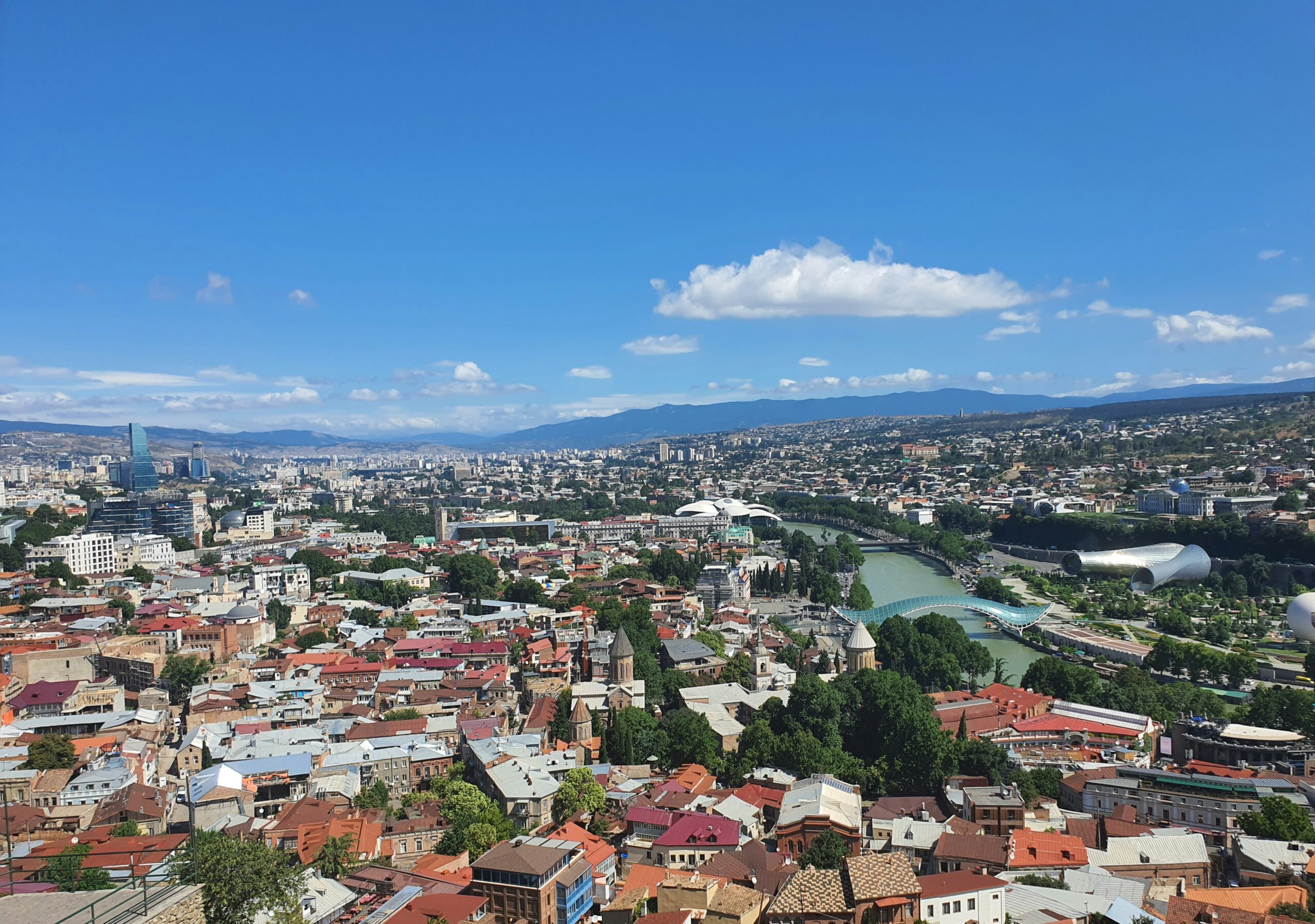
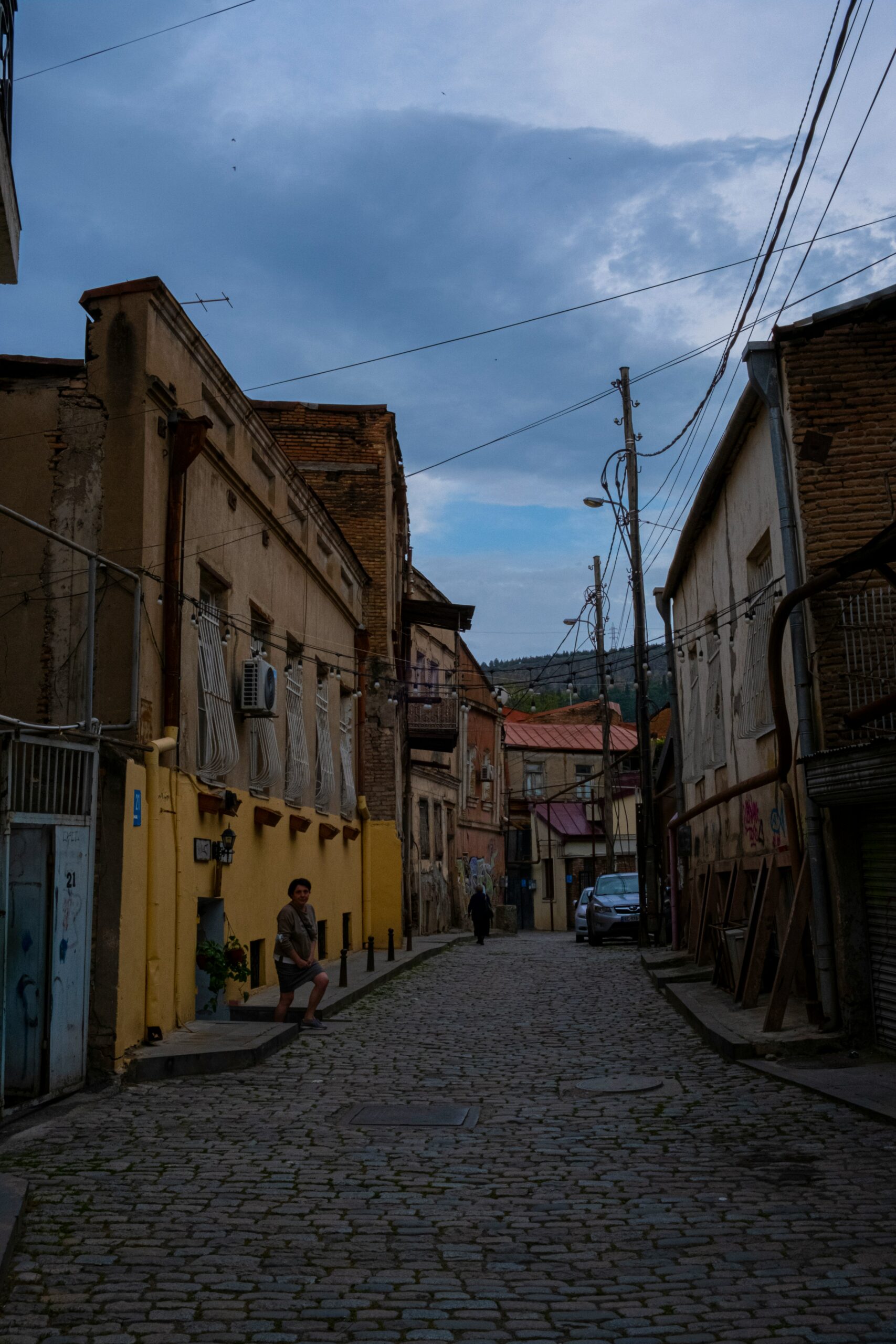
You arrive in Tbilisi and the air is warm. It smells of bread and woodsmoke. The Mtkvari River cuts the city in two. On one bank, the old town rises in crooked balconies and tiled domes. On the other, glass towers catch the sun. You have three days. It is enough. Here is how to spend them.
This guide is for the first-time visitor. Prices are current as of June 2026. One US dollar equals roughly 2.66 Georgian lari. Write that down. You will need it.
Day One: The Old Town
Morning — Freedom Square to the Bridge
Start at Freedom Square. It is free. There is a golden St. George slaying a dragon on a tall column. Stand there a moment. The old town begins at the square’s southern edge.
Walk down to the Bridge of Peace. The Italians built it in 2010. It is 156 meters of steel and glass, and it looks like nothing else in the city. Cross it. It costs nothing. The view of the fortress above is good in the morning light.
Lunch — Khinkali
You will be hungry. Walk into the old town and find Asi Khinkali. They make the best dumplings in the neighborhood. Order the Chef’s Khinkali and a Georgian salad. The bill will be 15 to 25 lari ($5.64–$9.40) per person. Eat the dumplings with your hands. That is how it is done. Hold the thick topknot, bite the side, drink the broth, then eat the rest. Do not eat the topknot. Toss it on the plate.
If Asi is full, go to Sofia Melnikova’s Fantastic Douqan nearby. It is famous for good reason. Cafe Daphna on a side street is also reliable and kind to the wallet.
Afternoon — The Fortress and the Baths
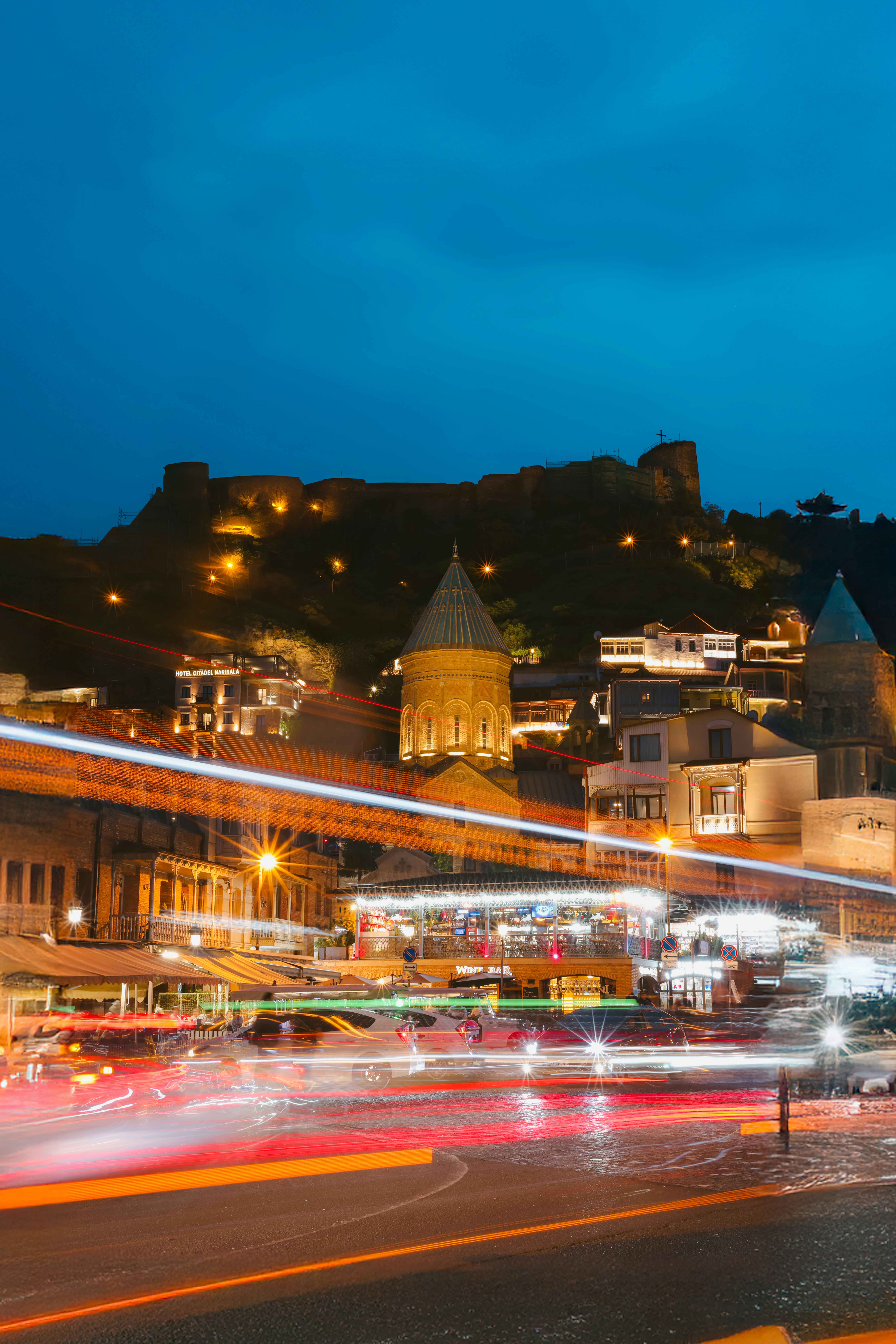
Find the cable car near Rike Park. It takes you up to Narikala Fortress. The fortress is from the 4th century. The ride costs 2.5 lari ($0.94) one way. It runs from 10 in the morning until 10 at night. Go up. The whole city spreads below you. Stay until you have seen enough. Then walk down through the old streets, or ride back.
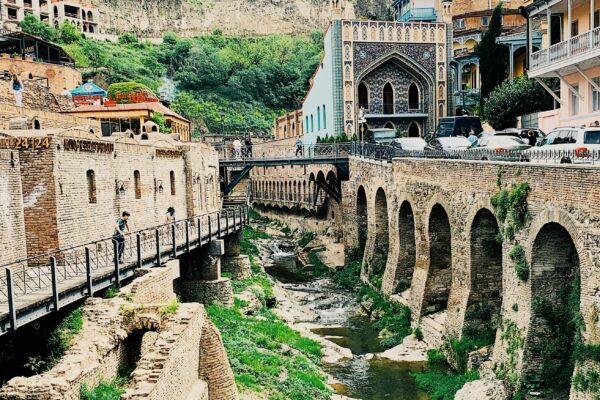
Walk south to Abanotubani, the sulfur bath district. This is where Tbilisi gets its name — tbili means warm. The domes rise from the ground like stone mushrooms. Below them, hot sulfur water has run for centuries.
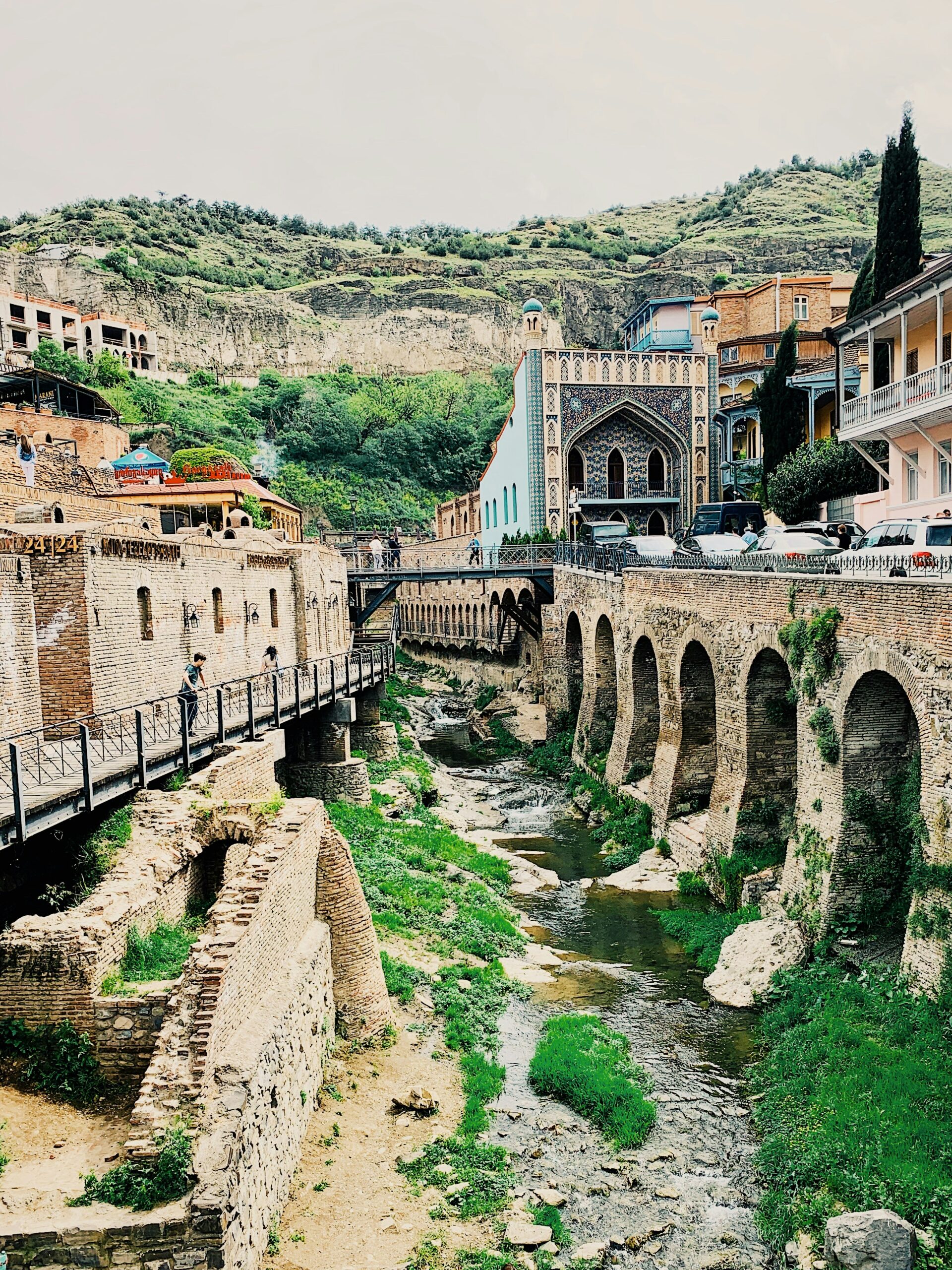
You can bathe here. The public baths charge about 10 lari ($3.76) for the men’s section and 6 lari ($2.26) for the women’s. A private room costs 70 to 130 lari ($26.32–$48.87) per hour. Get the private room if you can. It is worth it. The water is hot and mineral-heavy. You will come out clean in a way you did not know you needed.
Evening — Churches and Dinner
Before dark, walk past the Sioni Cathedral, built in the 6th or 7th century. Inside is a cross made of vine branches, brought by St. Nino. Then find Anchiskhati Basilica, the oldest church in Tbilisi, from the 6th century. If it is Sunday, you may hear polyphony singing — voices layered without instruments. It is something you will remember.
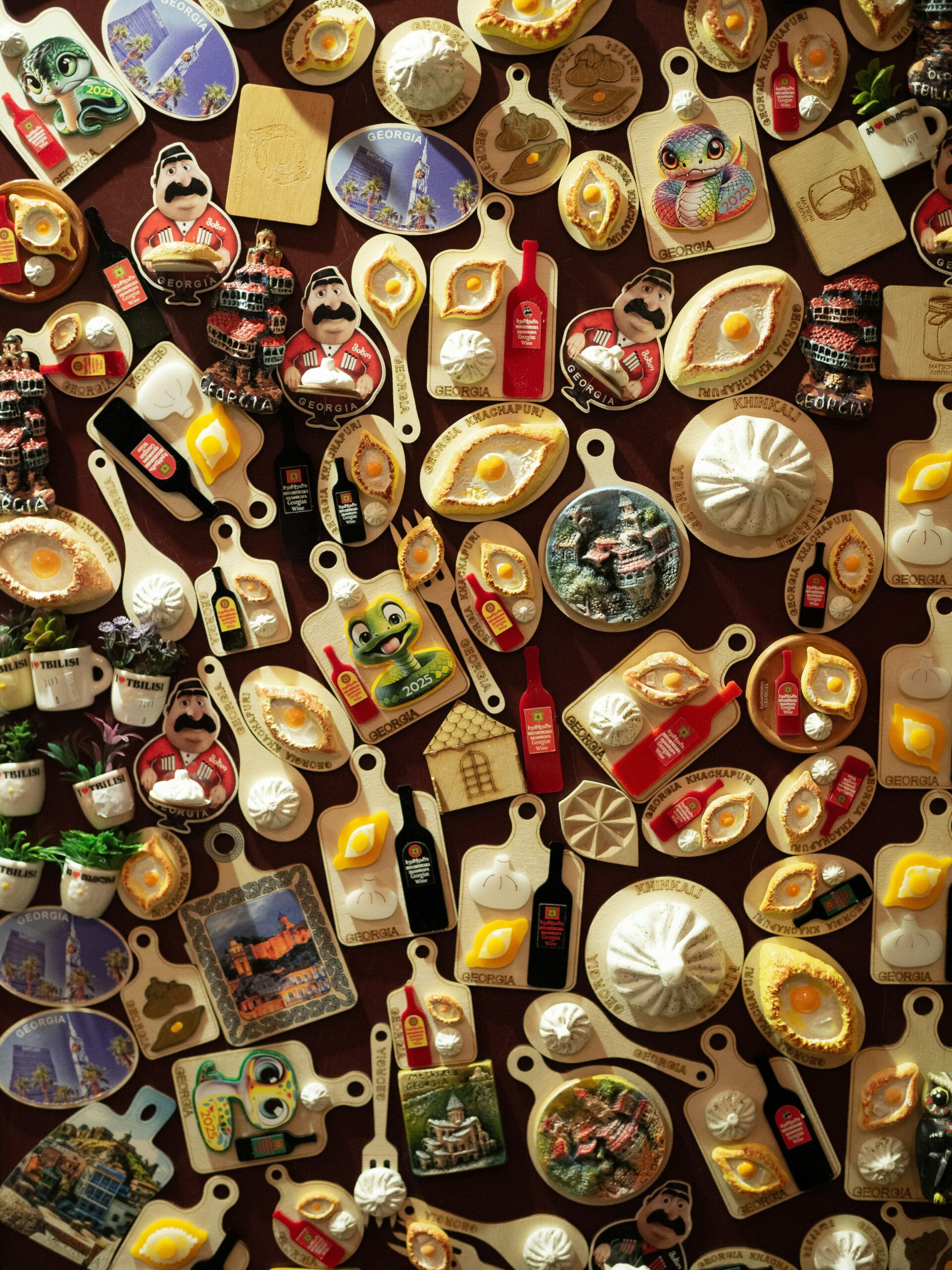
For dinner, stay in the old town. Any of the lunch spots will serve you well at night too. Order khachapuri — the bread filled with cheese and butter and a runny egg. Tear off a piece of the crust and stir the yolk. Drink the house wine. It will be good and cheap.
After dinner, walk back to the Bridge of Peace. At night the LED lights turn on and the bridge glows over the dark water. It is a fine way to end the first day.
Day Two: Culture and the Great Cathedral
Morning — The National Museum
Walk up Rustaveli Avenue. It is the main street. It runs about a kilometer and a half, lined with parliament, the opera house, and old facades. Halfway up is the Simon Janashia Museum, Georgia’s national museum.
It is closed on Mondays. Remember that. Every other day it opens at 10 and closes at 6. Admission is 30 lari ($11.28). Students pay less. Some reviews say 40 lari ($15.04) — that is when a special exhibition is included. Decide for yourself if you need it.
Inside, you will find gold artifacts dug from ancient tombs. There is a whole hall on the Soviet occupation — the years under Moscow. It is quiet and sobering. Plan two hours. It is enough.
Lunch — Rustaveli Area
Walk back down Rustaveli and eat at Klike’s Khinkali. They make khinkali without herbs, the purist way. The broth is clear and the meat is right. For something finer, try Chveni Restaurant — modern Georgian cooking, good lighting, wine list that matters. It costs more, around the upper-middle range. But the food is honest.
Afternoon — Sameba Cathedral
Walk 20 minutes east from the old town, or take a taxi for 5 to 7 lari ($1.88–$2.63). You will see it long before you arrive. Holy Trinity Cathedral — Sameba. It was built between 1995 and 2004, nine years of stone and gold. It stands 86 meters tall. It is one of the largest Orthodox cathedrals in the world.
Entry is free. Dress properly — cover your shoulders and knees. Women should cover their heads inside. The interior is vast. Light comes through high windows and falls on the marble floor. Walk around the grounds. There are gardens and smaller chapels. Sit on a bench. The city is below you and quiet.
Late Afternoon — Dry Bridge Market
Head back toward the river and find the Dry Bridge Market. It opens every day from 11 to 6, but weekends are livelier. It is an open-air flea market. Old men sell Soviet-era cameras, enamel brooches, coins, samovars, and paintings stacked against the railing.
Do not rush. Look at everything. Bargain politely. Buy a small icon or a brass cigarette case if you want a souvenir that means something. Prices are fair. Cash is king here.
Evening — Rustaveli at Dusk
Walk Rustaveli Avenue again as the light fades. The opera house lights up. The parliament building stands solid and grey. Find a café. Drink Georgian coffee — strong, small, Turkish-style. Then dinner wherever the street takes you. Chveni if you did not go at lunch. Otherwise, ask a local. They will point you somewhere good.
Day Three: The Sea, the Mountain, and the Wine
Morning — Tbilisi Sea
The Tbilisi Sea is not a sea. It is a reservoir, made in 1953. But it is big, and in summer it is where the city goes to breathe. Take bus 29 or a taxi — about 15 lari ($5.64), 15 to 20 minutes from the center.
In June, July, and August, you can swim. The water is clean enough. There are small beaches and picnic spots. You can rent a jet ski if you want noise and speed. Or just walk the shore and sit. In other seasons, it is still worth the trip for the quiet and the open sky.
Lunch — Back in Town
Return to the old town. Eat at Tavla. The food is high quality and the price is fair — honest Georgian cooking done with care. Order the lobio (red bean stew) in a clay pot. Order badrijani — eggplant rolls with walnut paste. Bread on the side. You will not spend much.
Afternoon — Mtatsminda Park
Above Narikala, higher still, is Mtatsminda Park. It sits on the mountain’s crest — a small amusement park with a Ferris wheel and old rides. You can walk up the path from the fortress, which takes about 40 minutes and is steep. Or take the funicular if it is running.
Entry to the park is free. Rides cost extra. But you are not here for the rides. You are here for the view. From the top, you can see the whole city, the river, the hills, and on a clear day, the Caucasus faintly white in the distance. Bring a jacket. The wind up there does not stop.
Evening — Wine
Georgia is the oldest wine country in the world. They have been making wine here for 8,000 years. Do not leave without tasting it.
Go to Karalashvili 1396, a wine cellar in a building from the 17th century, right in the old town. They do tasting tours. A flight of five or six glasses costs about 35 to 50 lari ($13.16–$18.80). The wine is made in the old way — fermented in clay vessels called qvevri, buried underground. It tastes of earth and dark fruit. It is unlike any wine you have had.
If Karalashvili is full, go to Vineria, also in the old town. Smaller, local, genuine. You can also book a 200-year-old cellar tour through GetYourGuide if you want a guide to explain it all.
End the night at a wine bar with a plate of cheese and churchkhela — the walnut-and-grape-molasses candy that looks like a candle. Drink the last glass slowly. You have earned it.
Practical Information
Money
- Currency: Georgian Lari (GEL). 1 USD ≈ 2.66 GEL.
- Cash vs. Card: Restaurants and cafés take cards. Small shops, market stalls, and some bathhouses want cash. Carry some.
- ATMs: Everywhere in the center. Bank of Georgia machines are reliable.
Getting Around
- Public Transit: One ride costs 1 lari ($0.38) and gives you 90 minutes of unlimited transfers between metro and bus. Buy a MetroMoney card for 2 lari ($0.75) at any station. Charge it and tap.
- Metro: Two lines, fast, clean, deep underground. It works.
- Taxi: Download the Bolt app. Do not hail cabs off the street — you will overpay. Airport to old town is 25 to 35 lari ($9.40–$13.16) via Bolt.
- Walking: The old town is compact. You can walk almost everywhere on Day 1 and Day 2. Bring good shoes. The cobblestones are uneven.
When to Go
- Best months: May, June, and September. The weather is 15 to 25°C. Pleasant for walking.
- Summer (July–August): Hot, 30°C+. Good for the Tbilisi Sea. Crowded.
- Winter: Cold and grey. The baths are still warm.
Language and Visas
- Language: Georgian is the official language. Russian is widely spoken by older people. Younger people speak English, especially in hospitality.
- Visa: Most Western passport holders — including US, UK, and EU citizens — get up to 365 days visa-free. Check your embassy’s page before you fly.
What to Wear
- Comfortable walking shoes — non-negotiable.
- For churches: shoulders and knees covered. Women carry a scarf for head covering.
- A light jacket for evenings, even in summer.
- Swimsuit for the baths and the sea.
Conclusion: Tbilisi Stays With You
Three days is enough to see the shape of the city. You will have stood on the fortress walls, walked the old streets, eaten bread and cheese and drunk dark wine from the ground. You will have heard polyphony in a stone church and sat in hot sulfur water while the city moved above you.
But Tbilisi does something to people. They come for three days and stay a week. They come for a week and come back the next year. The city is not spectacular in the way that makes postcards. It is better than that. It is real. It is worn and warm and alive.
Go. Eat the khinkali. Drink the wine. Walk until your feet hurt. You will understand.
Information and prices verified as of June 2026. Currency: 1 USD ≈ 2.66 GEL. Always double-check current rates and opening hours before you travel.