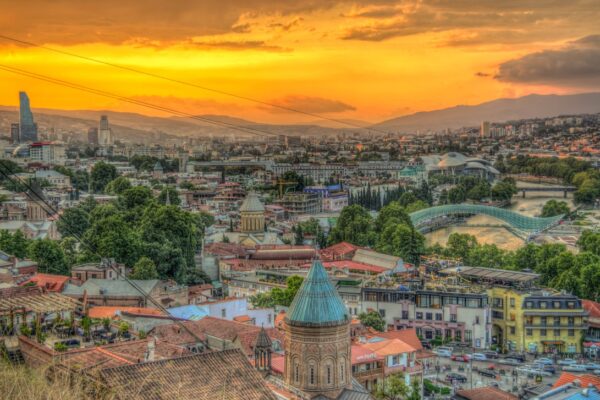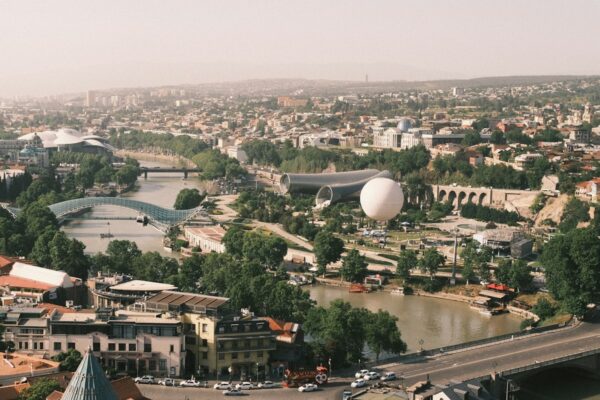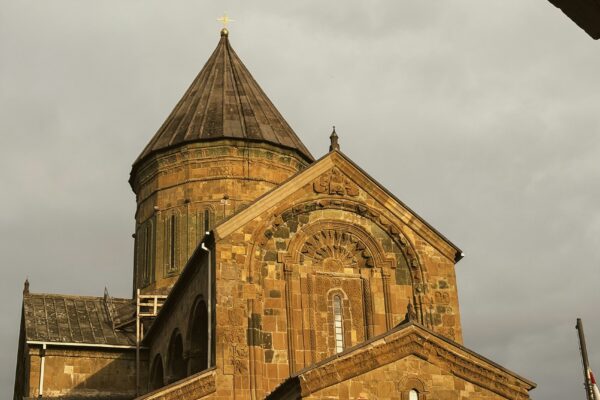
Travel anywhere in Georgia and at some point — in a restaurant, a church, a village square — you will hear three separate melodies weave together into a single sound. This is Georgian polyphony, a way of singing in which several voices move on independent lines at the same time. Thousands of years before Western music developed polyphony, these harmonies were already echoing through the valleys of the Caucasus. In 2008 UNESCO inscribed Georgian polyphonic singing on the Representative List of the Intangible Cultural Heritage of Humanity (Source: UNESCO, element 00008). This guide explains what polyphony is, how it varies by region, and exactly where you can hear it for yourself.

1. What Is Georgian Polyphony?
Polyphony is not simply a group of people singing the same melody together. It is the art of several voices singing different melodic lines simultaneously to form a single harmony. Georgian traditional polyphony is usually built from three parts: a bass (bari) that holds a steady low drone, a middle voice (mtaimeuri) that carries the main melody, and a top voice (mastali) that layers ornamentation above. What astonishes first-time listeners is that this entire texture is made with the voice alone, without instruments. Because these songs were sung at weddings, funerals, festivals, in the vineyards and at the dinner table, song in Georgia is less a performing art than a way of living together.
2. Three Regional Styles: Svaneti, Kakheti and Guria
Georgia is a small country, but its polyphony sounds strikingly different from region to region. UNESCO groups Georgian polyphony into three principal regional types (Source: UNESCO).
- Complex polyphony — Svaneti: in the high Caucasus the voices move in closely stacked chords, producing a dense and solemn sound. Cut off for centuries by altitude, Svaneti is widely regarded as preserving the most archaic form of the tradition.
- Polyphonic dialogue over a bass — Kakheti: in the eastern wine country one voice lays down a long, low bass while two upper voices answer each other in alternation. The most famous song of this style is Chakrulo, the drinking song that flew into space.
- Contrasted polyphony — Guria and Adjara: on the Black Sea coast the voices cross at speed, with sharply contrasting rhythms and melodies. Guria is known for krimanchuli, a virtuosic yodel-like technique often highlighted in studies of Georgian singing.
3. A Song That Went to Space: Chakrulo and the Voyager Golden Record
The moment Georgian polyphony reached its widest audience began, improbably, beyond the Earth. In 1977 NASA attached a “Golden Record” to the Voyager probes and sent it into the cosmos as a message to any civilization that might one day find it. Among the roughly twenty-seven musical selections on that record was the Georgian polyphonic song Chakrulo. Voyager 2 launched on 20 August 1977 and Voyager 1 on 5 September 1977, carrying this three-part Kakhetian male chorus out of the solar system (Source: NASA, Golden Record; Source: Chakrulo, Wikipedia). Chakrulo is a three-voice drinking song that dramatises a warrior’s resolve before battle, built on long bass drones and brilliantly ornamented upper lines. When UNESCO declared Georgian polyphony a Masterpiece in 2001, Chakrulo was cited as a prime example.
4. The Keepers of the Tradition: The Rustavi Ensemble
Polyphony survived because it was handed down village by village, but it was also deliberately preserved as a staged art. In 1968 the folklorist Anzor Erkomaishvili founded the Rustavi Ensemble, which gathered, transcribed and arranged songs and dances from every corner of Georgia into a single stage programme (Source: Rustavi Ensemble, Wikipedia). National companies such as Erisioni followed, and these ensembles have toured more than fifty countries. Yet as important as the stage is the everyday transmission: from parent to child, from village elders to young singers, around a table or in a church — the real classroom of Georgian polyphony.

5. Where to Hear Polyphony in Tbilisi
The easiest place for a traveller to hear polyphony is the capital, Tbilisi. There are two main routes (Source: wander-lush, Tbilisi live-music guide).
(1) Dinner-and-a-show restaurants. Restaurants such as Ethnographer and Ethno Tsiskvili in the Dighomi district combine a meal with folk performance. From about 8pm the programme moves from polyphonic singing to sword dances and national dance. Expect roughly 100 GEL per person or more including dinner, and reserve three to five weeks ahead in high season.
(2) National theatre performances. Concerts by the Rustavi Ensemble and the Georgian National Ballet at the Tbilisi Opera and Ballet Theatre or the Rustaveli Theatre offer the most polished presentation. Tickets run from about 30 to 150 GEL depending on seat and programme (Source: Tbilisi performance guide, approximate 2026 local prices), and can be booked in advance on sites such as tkt.ge. The sound, lighting and costumes here make hearing polyphony feel like a complete theatrical event.

6. Travel Tips: How and When to Listen
- Season: May–June and September–October bring the most weddings and outdoor festivals, so your chances of stumbling on spontaneous polyphony are highest.
- In local restaurants: beyond Tbilisi, in Kakheti (Sighnaghi) and Guria (Ozurgeti), staff or regulars at a country table may simply start singing when the mood rises. Clap along — you will be welcomed.
- Festivals: summer folk festivals and feast-day church services are a good way to hear sacred polyphony.
- Budget guide: theatre tickets 30–150 GEL, dinner shows about 100 GEL per person and up. At the June 2026 exchange rate of roughly 1 GEL ≈ 0.37 USD (about 577 KRW), a theatre ticket works out to about USD 11–56 (Source: live exchange rate, 2026-06-21). Prices are approximate local figures and may vary.
Final tip: polyphony in Georgia is not something you merely listen to — it is something you feel yourself inside of. Build at least one evening around a Tbilisi theatre or a Kakhetian table, and let thousands of years of harmony fill a Caucasian night. If you would like a detailed concert route or help with reservations, see the guide below.
🎵 See the polyphony concert route and ask about reservations →
Sources: UNESCO Representative List of the Intangible Cultural Heritage of Humanity (element 00008; proclaimed a Masterpiece in 2001, inscribed in 2008); NASA Voyager Golden Record; Chakrulo and Rustavi Ensemble (Wikipedia); polyphony.ge (research on Georgian polyphony). Exchange rate from a live query (2026-06-21); prices are approximate local figures and may differ in practice.