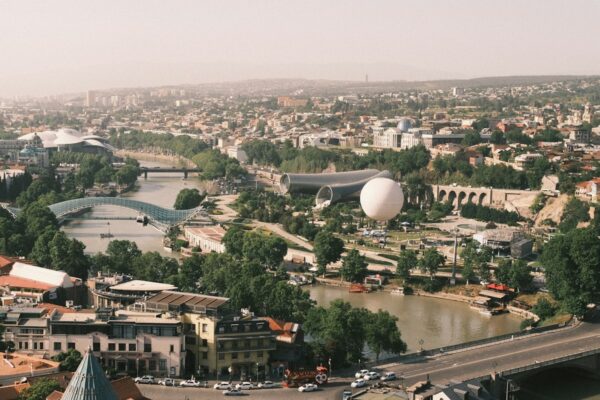
Just 30 minutes north of Tbilisi, the rivers Kura and Aragvi meet at a small town where time has stood still for nearly three millennia. Mtskheta, Georgia’s first capital and the cradle of Georgian Christianity, was inscribed on the UNESCO World Heritage list in 1994, and it remains the spiritual heart of the Georgian Orthodox Church to this day.
## Jvari Monastery: A 6th-Century Prayer Carved in Stone
Perched dramatically on a hilltop above the confluence of two rivers, Jvari (“Holy Cross”) Monastery is a 6th-century stone masterpiece that has inspired pilgrims, poets, and travelers for fifteen centuries. It was here, on this very cliff, that the Russian poet Pushkin reportedly recited verses from the Psalms, struck by the silence of the Caucasus. Inside, fragments of original 6th-century reliefs remain, and the open-air terrace offers views that stretch all the way to snow-capped peaks on clear days. As of 2026, admission is free, and the monastery is open daily from 09:00 to 19:00. Visit in the late afternoon for the best golden light on the stone walls.
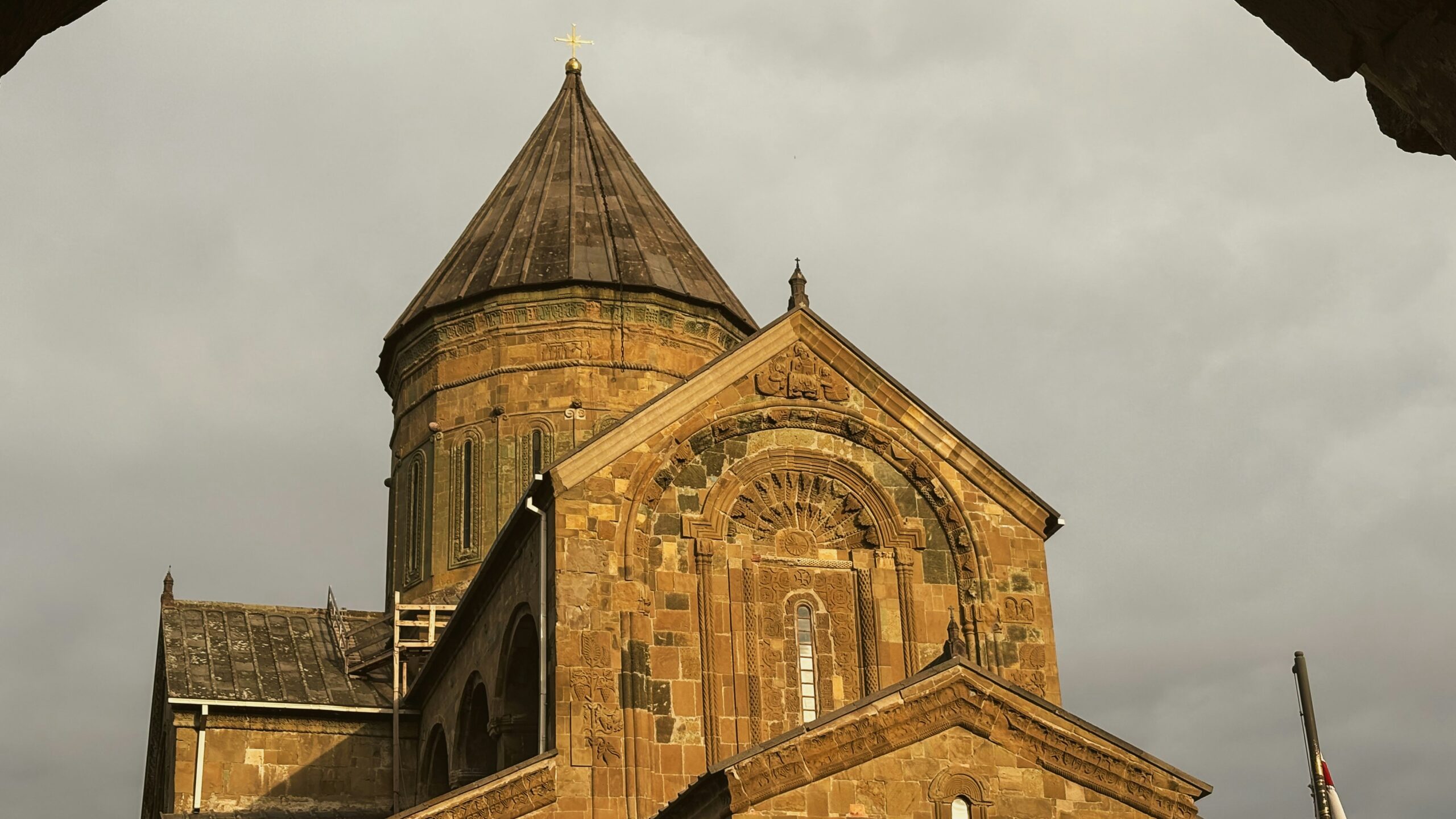
## Svetitskhoveli Cathedral: Where Georgian Christianity Was Born
A short 10-minute drive from Jvari, the massive conical dome of Svetitskhoveli (“Life-Giving Pillar”) Cathedral dominates the center of Mtskheta. Built in the 11th century, it is the largest and most important church in Georgia, the site of royal coronations, christenings, and funerals for over a thousand years. According to tradition, this is where the robe of Christ was brought by a Georgian Jew named Elias (or, in another version, the apostle Simon the Canaanite), making it one of the most sacred sites in the entire Orthodox world. Inside, the soaring nave is lined with 17th- and 19th-century frescoes, and the original 6th-century cedar doors are still preserved in the south porch. Admission is free, but women should bring a headscarf, and Sunday morning liturgies may restrict interior access. Weekday mornings are ideal.
## Practical Information: Getting There from Tbilisi
The easiest way to reach Mtskheta is by marshrutka (minibus) from the Didube Bus Terminal metro station in Tbilisi. Vans depart from around 7:00 AM, leaving when full, with services every 20 minutes throughout the day. The fare is roughly 1 GEL (about $0.38 / ₩572), and the journey takes about 30 minutes. To reach Jvari Monastery, you can take a taxi from Mtskheta town — both Bolt and Yandex operate in the area — for around 10 GEL (~$3.77 / ₩5,720) round trip, or walk the steep 30-minute uphill path from the town center. Budget about 12–15 GEL (~$4.52–$5.65 / ₩6,860–8,580) for a hearty bowl of kharcho, Georgia’s signature walnut-and-beef soup, at one of the small family-run restaurants along the main street.
## A Closing Note
Mtskheta is not a place of grand spectacle. It is a place of quiet stone, of rivers that have been flowing since long before any of us, and of a silence that somehow feels more alive than the bustle of Rustaveli Avenue. If Tbilisi is Georgia’s head, Mtskheta is its heart — and it is well worth the half-day detour.