
If Georgia had a single must-visit spa town, it would be Borjomi. Tucked into the Lesser Caucasus about two hours by train from Tbilisi, this small resort city is built around volcanic mineral springs, deep-green pine forests, and the sprawling Borjomi-Kharagauli National Park. The bottled Borjomi water is known across the former Soviet Union, but drinking the water at the source—where it rises from 1.5 km underground—hits completely differently.
Borjomi Central Park: Birthplace of the Famous Mineral Water
The story starts in 1842, when Caucasus Governor Evgeni Golovin began developing the mineral springs. Today that original site is Borjomi Central Park, a narrow green gorge threaded by the Shavtskala (Borjomula) River. Entry costs 5 GEL (~$1.88 / ₩2,860), and the real attraction is free: seven natural springs flow right through the park, and visitors can fill bottles straight from the source. The water contains more than 60 trace minerals—locals credit it with digestive and circulatory benefits—and a New Year tradition persists in many Georgian families of cracking open a bottle of Borjomi water to mark the holiday.
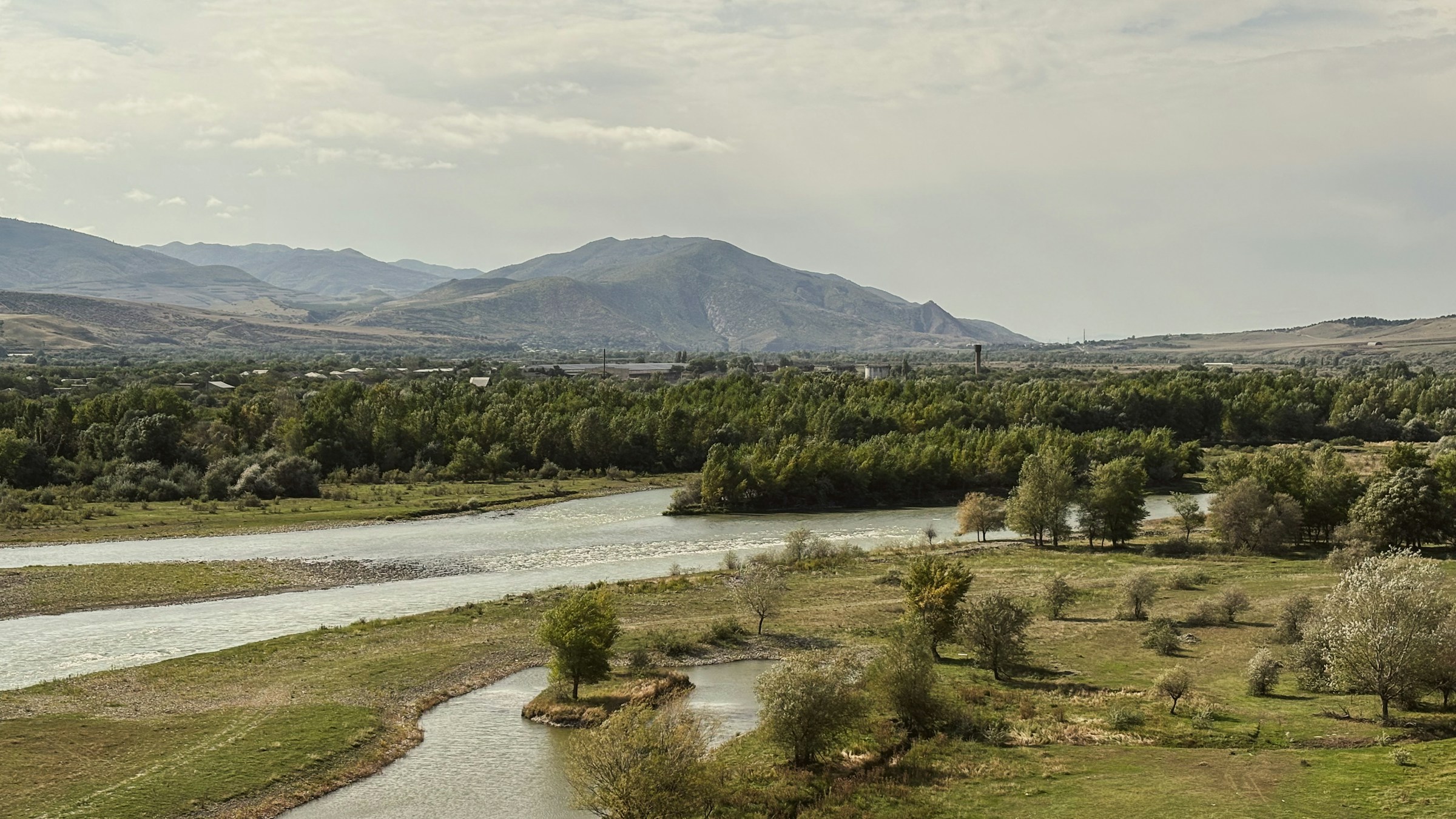
The park itself is a masterclass in Georgian landscape design. Gravel paths wind under dense hornbeam and cypress shade; a cable car (7 GEL / ~$2.63 one-way) climbs to a hilltop platform with sweeping views over Borjomi city and the Kura River valley. Families tend to linger near the small zoo and amusement rides, while couples usually head for the riverside walking path. Hours are 09:00–22:00 year-round, and the main gate accepts cards.
Borjomi-Kharagauli National Park: One of Europe's Largest Protected Areas
About 30 km south of town lies Borjomi-Kharagauli National Park—193,494 hectares of old-growth Caucasus wilderness, one of the largest protected areas in Europe. Park entry costs 5 GEL for adults (~$1.88) and 2 GEL for children aged 6–15 (~$0.75), with kids under 6 free. Hiking passes are separate: 1-day 10 GEL (~$3.75), 3-day 15 GEL (~$5.63), and 4–5 day 20 GEL (~$7.50). The park is open from March 1 to November 30 each year, and every hiker must register at the visitor center before heading out.
There are five multi-day routes, ranging from a half-day beginner trail to a challenging five-day wilderness crossing. The most popular is the Panorama Trail—43 km over three days at a moderate level, with views of the Caucasus ridge that are unforgettable in July and August when wildflowers bloom and the air thins into a pale blue haze. After a day on the trail, most hikers return to Borjomi town for a hearty meal of Adjarian khachapuri (boat-shaped cheese bread) and a glass of qvevri-aged Saperavi, the classic pairing.
Practical Information
- Location: Samtskhe-Javakheti region, about 160 km west of Tbilisi
- Getting there: Train from Tbilisi ~2 hours (one-way 10 GEL / ~$3.75), or marshrutka (minibus) on the way to/from Kutaisi or Batumi
- Language: English signage is common; tourist info office open 09:00–18:00
- Exchange rate reference: 1 GEL ≈ 572 KRW (XE.com, June 2026), 1 USD ≈ 2.66 GEL
- Suggested itinerary: 1 night, 2 days — Day 1 Central Park and town, Day 2 a single national park trail plus a wine tasting
- Good to know: The national park closes for hiking in winter (December–February), so plan trail visits between May and October
From the Black Sea to the high Caucasus, Borjomi offers a one-city taste of Georgia in every sense. One sip of mineral water, one mountain view—sometimes that really is the whole trip.